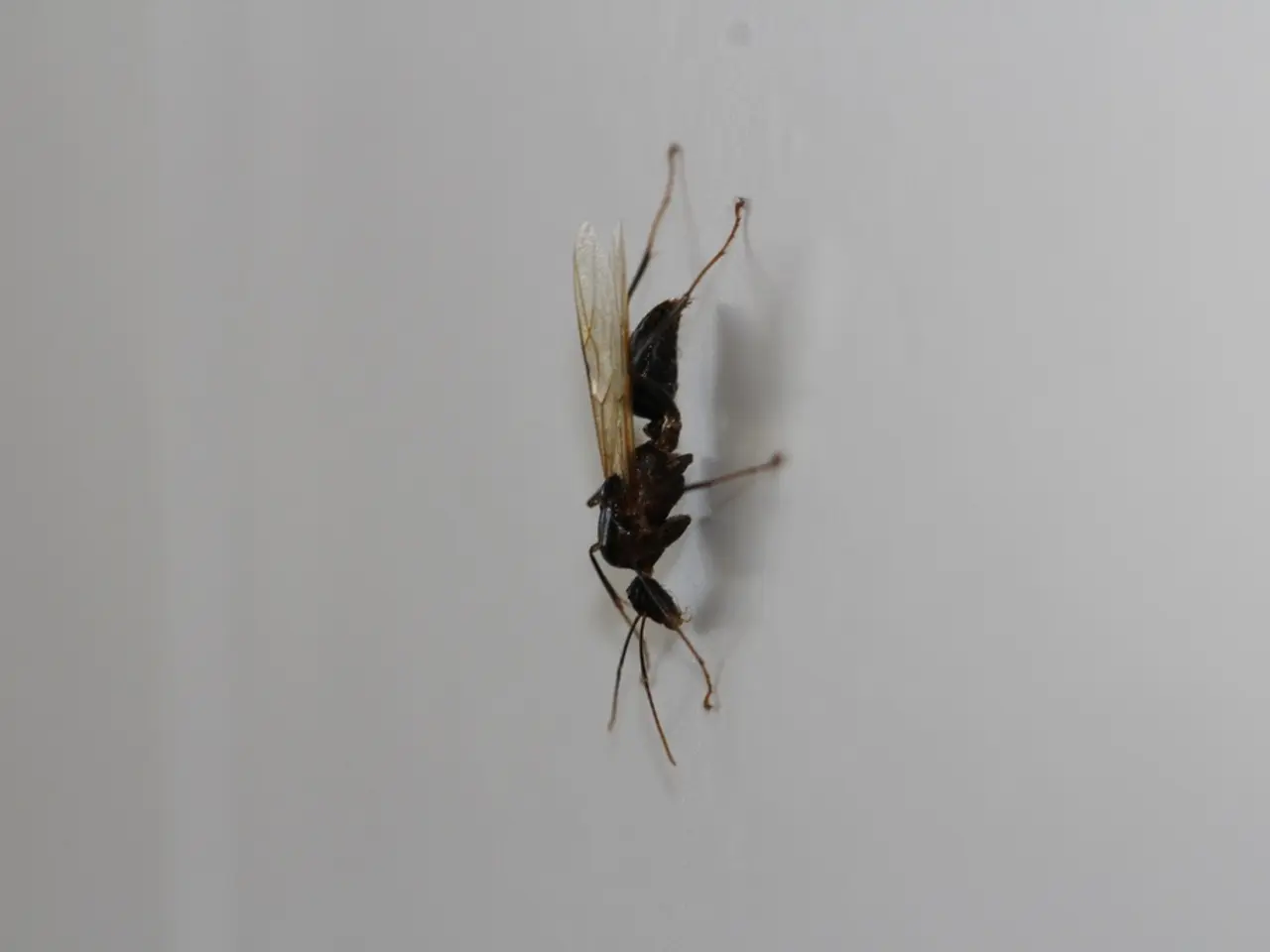
Radioactive wasp nests discovered by workers at a nuclear facility in South Carolina
Radioactive Wasp Nests Discovered at Savannah River Site
The Savannah River Site (SRS), a former nuclear weapons production facility in South Carolina, has recently made headlines due to the discovery of radioactive wasp nests. The site, which operated from the 1950s until the fall of the Soviet Union, produced plutonium and tritium, essential components for nuclear weapons during the Cold War.
In July 2025, during routine radiation monitoring near nuclear waste storage tanks, radioactive wasp nests were discovered at the Savannah River Site. The first nest was found on July 3 near one tank, followed by three more nests. These nests showed radiation levels more than 10 times above federal safety limits, but the soil and surrounding areas showed no contamination.
The radioactive wasp nests are considered contaminated by "legacy" radioactive materials—remnants from past nuclear operations rather than any recent accidental releases. Wasps likely gathered materials from the immediate environment close to radioactive waste storage areas, leading to the nests accumulating radioactive contamination through their nest-building process.
Since wasps usually fly only a few hundred yards from their nests, officials determined the contamination poses no health risk to the public or workers and no risk beyond the site boundaries. Upon discovery, the radioactive nests were sprayed with insecticide, removed, and treated as radioactive waste. No further field action was required, and the site cleanup operations continue as planned.
The incident highlights ongoing challenges of managing environmental contamination decades after nuclear weapons production ceased. It also shows how wildlife can come into contact with residual radioactivity in such legacy sites. The exact species of wasp found at the Savannah River Site and the radioactive isotopes present in the nests have not been specified in the reports.
Interestingly, the discovery of these radioactive wasp nests may have revealed potential risks of large areas of significant contamination that have escaped surveillance in the past or new or old radioactive contamination coming to the surface unexpectedly. Timothy Mousseau, a biologist at the University of South Carolina, believes this could be a significant finding.
Despite the challenges, the Department of Energy began cleaning up the site in 1996, and operations are expected to continue into the 2060s. In a surprising turn of events, the Trump administration has plans to produce nuclear weapon cores known as plutonium "pits" at the Savannah River Site, with the project set to begin in the 2030s. This decision has sparked debate and concerns among environmentalists and local communities, as the site continues to grapple with its past and the ongoing cleanup efforts.
- The Savannah River Site, renowned for its nuclear history, recently revealed radioactive wasp nests.
- These nests, discovered near nuclear waste storage tanks, exhibited radiation levels exceeding safety limits.
- The isotopes present in the nests remain unspecified in the reports.
- Wasps, likely gathering materials from the immediate environment, inadvertently built radioactive nests.
- The contamination, sourced from legacy radioactive materials, does not pose a health risk to the public or workers.
- The incident serves as a reminder of ongoing challenges in managing environmental contamination.
- Officials sprayed the nests with insecticide, treated them as radioactive waste, and removed them.
- The discovery of these nests could indicate large areas of significant contamination that have evaded surveillance in the past.
- The biological species discovered at the site and the extent of contamination remain undisclosed.
- The Department of Energy started dealing with the site's contamination in 1996 and plans continue into the 2060s.
- The Trump administration aims to produce nuclear weapon cores at the Savannah River Site by the 2030s.
- This decision has instigated debate and concerns among environmentalists and local communities.
- Science and environmental-science play crucial roles in understanding the risks associated with nuclear facilities.
- Climate-change and the impact on industry may divert attention from issues like the Savannah River Site.
- Medical-conditions and chronic-diseases, such as chronic-kidney-disease, often require addressing through medical-treatment and care.
- Cardiovascular-health can be improved by maintaining a healthy lifestyle, regular exercise, and proper diet.
- Industrial, manufacturing, and automotive sectors must employ safety measures to minimize hazardous substances and exposure.
- Neurological-disorders and mental-health issues require attention from healthcare providers and caregivers.
- Innovations in health-and-wellness, such as wearables, smart-home-devices, and data-and-cloud-computing, can help track and manage various health conditions.
- Cybersecurity is crucial in securing personal-finance, banking-and-insurance, and fintech systems.
- Real-estate and small-business ventures are significant elements of the economy, which is influenced by the housing-market, stock-market, and private-equity.
- Diversity-and-inclusion is vital in businesses and leadership roles to create a harmonious and productive working environment.
- Transportation, including public-transit, retail, and entrepreneurship, determine the mobility and accessibility of goods and services.
- Energy production, conservation, and efficient use can impact climate-change and create opportunities in the energy sector.
- Saving, budgeting, debt-management, and investing form part of wealth-management strategies for personal-finance.
- Finance, technology, and business careers cater to various interests and skill sets within the economic landscape.
- Venture-capital and investing can provide substantial opportunities for small businesses and startups in technology and other sectors.
- The digital age encompasses various aspects of modern life, including smartphones, gadgets, artificial-intelligence, and the internet, shaping the world of science, business, health, and lifestyle.