Foraged Fungi: A Gastronomic Exploration
Edible Mushrooms in Ohio: A Guide for Foragers
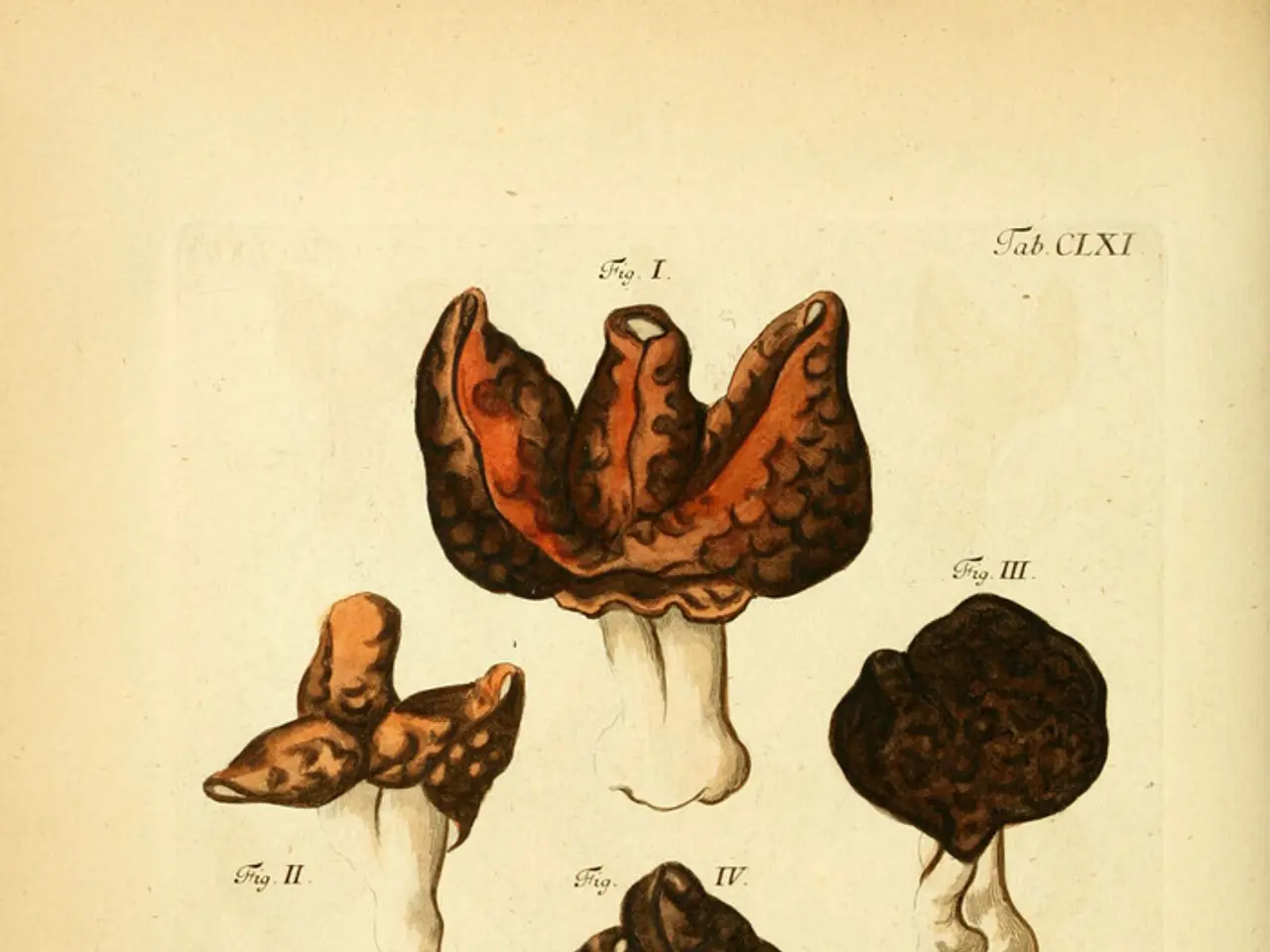
Ohio is home to a diverse array of wild mushrooms, some of which are not only safe to eat but also delicious when properly prepared. Here are three commonly found edible mushrooms in the state: the Giant Puffball, Chicken of the Woods, and smooth chanterelle.
Giant Puffball (Calvatia gigantea)
This large, spherical mushroom can be found in meadows, fields, and deciduous forests in late summer and autumn. When young and edible, the inside flesh is pure white, solid, and has no gills or other internal structures. Cutting it open reveals a solid white interior; if it shows yellow or greenish-brown colors, it is overripe and should not be eaten. Overripe puffballs become spongy and fall apart on touch. Puffballs lack gills, unlike many poisonous lookalikes, so slicing it open to confirm is essential.
Chicken of the Woods (Laetiporus sulphureus)
This bright orange-yellow shelf mushroom grows on trees, often found on hardwoods. It has a layered, chicken-like texture. It grows mainly on tree trunks or stumps in southeastern Ohio and is distinguishable by its bright color and shelf shape. It is edible and tasty but must be properly identified due to some lookalikes.
Smooth Chanterelle (Cantharellus lateritius)
Golden-yellow to orange mushrooms with a smooth cap rather than pronounced gills, smooth chanterelles are considered good tasting but fragile and thus harder to collect. They are found in hardwood forests and known for their edible quality among mushroom hunters.
Identifying these edible mushrooms is crucial for safety. Always cut puffballs open to confirm no gills or immature caps inside — edible puffballs have a solid white interior. Avoid mushrooms with green gills or spore prints (such as false parasols), as these are toxic. Always use detailed local mushroom guides or join a local mycology club to positively identify mushrooms before consumption, as many edible mushrooms have poisonous lookalikes. If uncertain, do not consume wild mushrooms; the safest mushrooms are obtained from reliable sources or specialists.
In addition to these three mushrooms, other edible species can be found in Ohio, such as the Slippery jack and the Chanterelle. However, it's important to remember that not all mushrooms growing in Ohio are safe to eat. Some wild mushrooms in Ohio are poisonous, and it's crucial to learn the characteristics of the Amanita mushrooms, as several species are poisonous.
So, before venturing into the woods to forage for wild mushrooms, be sure to educate yourself on the safe and edible species in Ohio and always practice caution when identifying mushrooms. Happy foraging!
- Incorporating edible mushrooms into a health-and-wellness lifestyle can lead to delicious and nutritious food-and-drink options, as the guide for foragers in Ohio showcases, such as the Giant Puffball, Chicken of the Woods, and smooth chanterelle.
- Engaging in sports like hiking or trail running can provide an excellent opportunity to explore the outdoors and discover new species of edible mushrooms, like the Chicken of the Woods or smooth chanterelle, while also promoting a lifestyle focused on personal health and wellness.